
Rental Car Accident: Safety, Photos, and Calls in Order
On this page
Quick answer
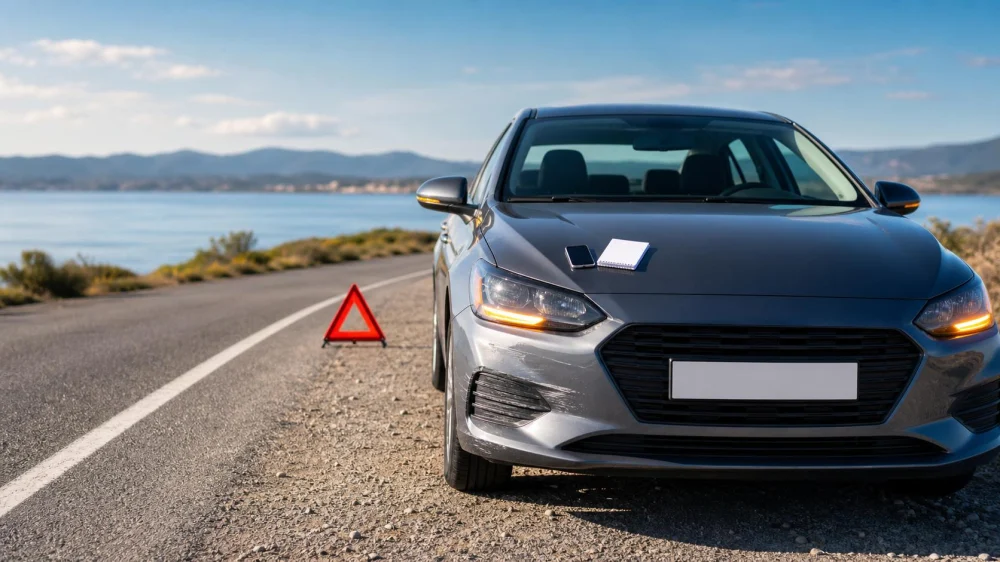
After a rental-car crash, protect people before property: stop, turn on hazard lights, call 911 for injuries or danger, and follow police instructions. Exchange required information, take photos only from safe positions, then contact the rental company using the number in the agreement or app. Also notify every insurer or card-benefit administrator that may require prompt notice.
Do not admit fault, sign an unfamiliar settlement, authorize a tow, repair the car, or continue driving a damaged vehicle without instructions. State law, the rental contract, insurance policies, and card benefits can each impose different reporting and documentation duties.
Secure the scene and get help
Stop as close to the scene as safety allows. Switch on hazard lights, check yourself and passengers, and call emergency services for injuries, fire, leaking fuel, blocked traffic, suspected impaired driving, aggressive behavior, or an unsafe location. Do not stand between vehicles or in an active lane.
Give the dispatcher the road, direction, nearest marker, number of vehicles, visible hazards, and known injuries. Provide first aid only within your training. Do not remove a seriously injured person unless an immediate danger such as fire requires it.
If another driver leaves, do not chase. Record the vehicle description, plate, direction, and witness information, then tell police.
Move the vehicle only when appropriate
Rules about moving vehicles vary. Follow police or dispatcher instructions. In a minor crash where law and safety permit, moving to a shoulder may prevent another collision. Photograph positions first only if that can be done without entering traffic or delaying movement.
Do not drive when airbags deployed, a tire or wheel is damaged, fluid is leaking, lights are broken at night, steering or brakes feel abnormal, warning lights indicate a serious problem, glass blocks visibility, or bodywork contacts a tire. Ask the rental company and authorities about towing.
Know the rental vehicle’s plate, color, make, model, and location. This information is usually on the key tag or agreement, but never search paperwork while driving.
Document without creating risk
From safe ground, photograph wide views of the scene, each vehicle and plate, impact points, road markings, signals, weather, debris, skid marks, and any relevant sign. Then take closer photos of rental-car damage from several angles.
Exchange names, contact details, driver’s-license information, plate and registration details, and insurance information as local law requires. Record the police agency, officer name, event number, and how to request the report. Ask witnesses for contact information without pressuring them.
Write factual notes: time, location, direction of travel, lane, signal, speed range, weather, and what happened. Avoid guesses about fault, injuries, or repair cost. Do not post the crash on social media.
Make the required calls
- Emergency services or police, as the situation and local law require.
- The rental company’s accident or roadside number.
- Your personal auto insurer if the policy may apply.
- The credit-card benefit administrator if you relied on card coverage.
- A travel, employer, or third-party insurer when applicable.
Ask each party for a claim or reference number, deadline, required forms, approved tow destination, and document list. Record the representative’s name, date, time, and instructions. Notice to one company does not automatically notify the others.
Complete reports and preserve records
The rental company may require an accident report even for small damage or a single-vehicle incident. Complete it accurately and retain a copy before submission. Do not leave fields blank when the company can clarify them.
Keep the rental agreement, checkout condition report, photos before and after the crash, police information, tow receipt, fuel receipt, medical records, travel changes, emails, and app messages. Preserve original files with timestamps.
Some jurisdictions require a driver report to a motor-vehicle agency based on injury or damage thresholds. Ask police or the relevant state agency rather than assuming the police report completes every duty.
Towing and replacement vehicles
Use the rental company’s authorized roadside process unless emergency authorities direct otherwise. An unauthorized tow or repair may complicate reimbursement. Remove personal items only when the scene is safe and inventory anything left behind.
Do not accept a replacement vehicle until the company confirms the original contract status, rates, fuel, insurance or waiver selections, authorized drivers, and return location. Inspect and photograph the replacement before departure.
If you are too shaken, injured, medicated, or tired to drive, arrange other transportation. Being offered a replacement does not mean you must drive immediately.
Accident checklist
- Stop, use hazards, check injuries, and call for help.
- Stay out of traffic and follow police instructions.
- Exchange required information and identify witnesses.
- Photograph safely and write factual notes.
- Call the rental company and applicable coverage providers.
- Use authorized towing and repair procedures.
- Keep every form, receipt, photo, and reference number.
Frequently asked questions
Do I call the rental company before police?
Protect life and follow local law first. Call emergency services for injuries or danger, then the rental company.
Should I say the crash was my fault?
Provide honest facts, but do not speculate or negotiate fault at the scene.
Can I drive back to the rental branch?
Only if authorities and the rental company say the vehicle is safe and permitted to move.
What about a parking-lot scrape with no other driver?
Document it and report it according to the contract; local reporting rules may still apply.
Does the credit card handle everything?
No. Benefits have exclusions, deadlines, and documentation requirements and may cover only certain damage.
When should I seek medical care?
Use emergency care for acute symptoms. Some injuries appear later, so obtain clinical advice if pain, dizziness, confusion, weakness, or other symptoms develop.
Sources and evidence notes
The rental agreement, rental company accident instructions, applicable state law, police directions, insurance policies, and credit-card benefit guide are the controlling sources for a specific event. Keep copies available offline before a trip.
USAGov directs unresolved rental-car complaints to state consumer-protection offices and the Federal Trade Commission. See USAGov travel complaint guidance.
Conclusion and next steps
At a rental-car accident, put safety and emergency reporting first. Document from safe positions, exchange required information, and notify the rental company plus every relevant coverage provider. Do not drive, tow, repair, or replace the vehicle without authorization, and preserve a complete record for claims and follow-up.




 WIHA MotorCars 威漢汽車 (Sprinter Passenger Van Rental)4.0 (7 reviews)
 Budget Car Rental4.0 (24 reviews)
 Lamborghini & Rolls Royce Rental Miami0.0 (0 reviews)
 Hertz Car Rental - Alexandria - South Pickett Street2.0 (230 reviews)
 ACO Rent A Car Los Angeles1.0 (39 reviews)
 Alamo Rent A Car4.0 (686 reviews)
 Which Car Rental Company Accepts Debit Cards?
 Is Silicon a Car Rental Company? Find Out the Truth
 How to Rent a Car in the US as an International Traveler
 Best Rental Cars for Long Distance Driving Comfort
 What to Do If Your Rental Car Gets Stolen in the US — Step-by-Step Guide
 Does Discover Card Cover Car Rental Insurance? What You Must Know