
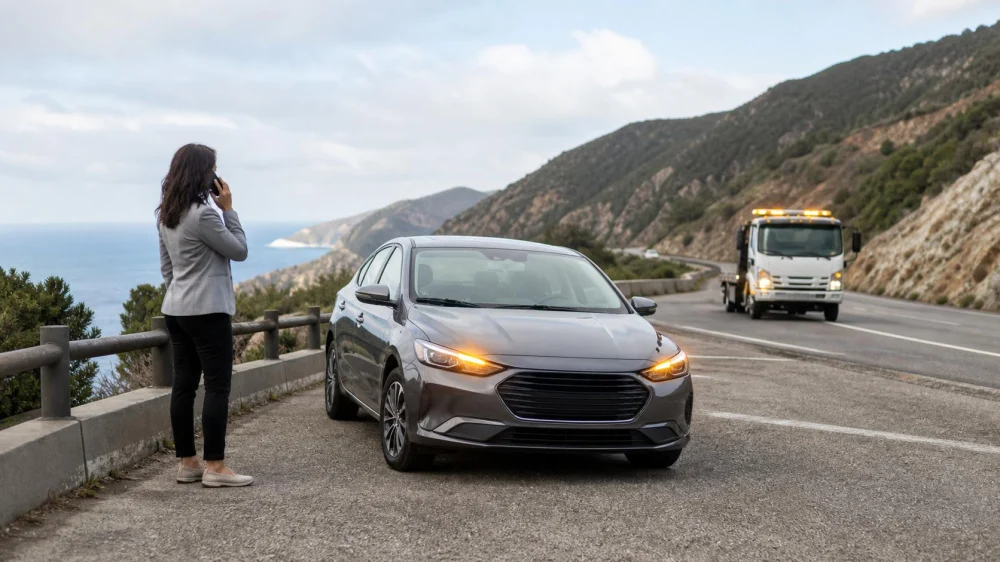
Rental Car Breakdown: Use the Roadside Plan First
On this page
Quick answer
If a rental car breaks down, move out of traffic when the vehicle can be driven safely, switch on hazard lights, and protect passengers. For fire, smoke, collision danger, medical emergency, or an unsafe location, call emergency services first. Then contact the rental company through the number in the agreement or app. Follow its towing and repair instructions, document the vehicle and calls, and do not approve repairs or leave the keys without authorization.
A rental breakdown is a mechanical, electrical, tire, fuel, or other failure that prevents safe normal use. The rental contract and roadside plan control the response.
Get to safety
- Ease off the accelerator and signal if control remains normal.
- Move to a wide shoulder, parking area, or other protected location when safe.
- Set Park and the parking brake, turn on hazards, and assess traffic.
- Keep passengers behind a barrier or in another safe location when appropriate.
- Do not stand beside the traffic-facing side or crawl under the vehicle.
If steering, braking, tire control, visibility, or fire risk is compromised, stop as safely as possible and request emergency help.
Call the authorized provider
Use independently verified rental documents rather than a random search result. Provide the agreement number, vehicle location, plate or unit details, symptoms, warning lights, fuel or charge level, passenger needs, and whether the location is dangerous.
Ask for a case number, provider name, estimated arrival, towing destination, key instructions, and what to do if conditions worsen.
Document the problem
- Photograph the vehicle position only from a safe place.
- Record dashboard warnings without operating the phone while driving.
- Note time, weather, mileage, fuel or charge, and symptoms.
- Save call logs, messages, receipts, and case numbers.
- List personal property before a tow.
Do not authorize repairs casually
Rental contracts often require prior approval. Do not choose a tow destination, buy a tire or battery, add fluids, jump-start, or arrange repairs until the company authorizes the action, unless emergency safety requires immediate intervention. Never open high-voltage EV components or continue driving on a damaged tire.
Replacement and costs
Ask whether a replacement vehicle is available, where exchange occurs, how passengers get there, and whether the contract, rate, insurance, toll device, child seat, or fuel policy changes. Request written instructions about reimbursable transport, lodging, towing, and repairs. Keep originals of all receipts.
Important notes
This is general safety and rental guidance, not legal or mechanical advice. Contracts, roadside coverage, insurance, jurisdiction, and emergency conditions vary. Human safety comes before protecting the vehicle or avoiding fees.
Evidence notes
The workflow reflects common fleet and roadside practice: secure the scene, contact the contract-authorized provider, avoid unauthorized work, document the event, and obtain written replacement instructions. The rental agreement and rental company are primary sources.
FAQ
Should I call the rental company or my insurer?
Contact emergency services when needed, then follow the rental contract. Notify insurers under their required timelines.
Can I change a flat tire?
Only if authorized, equipped, trained, and in a safe location. Roadside service is often safer.
Can I leave before the tow arrives?
Ask the rental company and police when involved. Confirm keys, property, and custody.
Who pays for the tow?
It depends on the contract, cause, coverage, and authorization. Get written guidance.
What if I have no signal?
Use emergency call features when available, seek a safe staffed location, and document attempts.
Next steps
Before driving, save the rental roadside number and contract offline. During a breakdown, secure people first, open a case with the authorized provider, document safely, and wait for written towing, repair, and replacement instructions.





 Avis Car Rental4.0 (151 reviews)
 Hertz Car Rental - Flemington, Ringoes - Hunterdon Collision Hle3.0 (10 reviews)
 Budget Car Rental2.0 (74 reviews)
 Kulp Car Rentals4.0 (127 reviews)
 Enterprise Rent-A-Car4.0 (295 reviews)
 Avis Car Rental3.0 (159 reviews)
 Is Sixt Car Rental Legit? What U.S. Travelers Need to Know
 The Most Affordable Car Rental Companies in the US
 How to Extend Your Enterprise Car Rental
 Top Car Rental Locations for Budget Travelers in the US
 Renting a Car for a Cruise: What You Need to Know Before You Go
 What is a Drop Fee for Car Rental? Everything You Need to Know