
Rental Car Tolls: Compare Transponder and Plate Fees
On this page
Quick answer
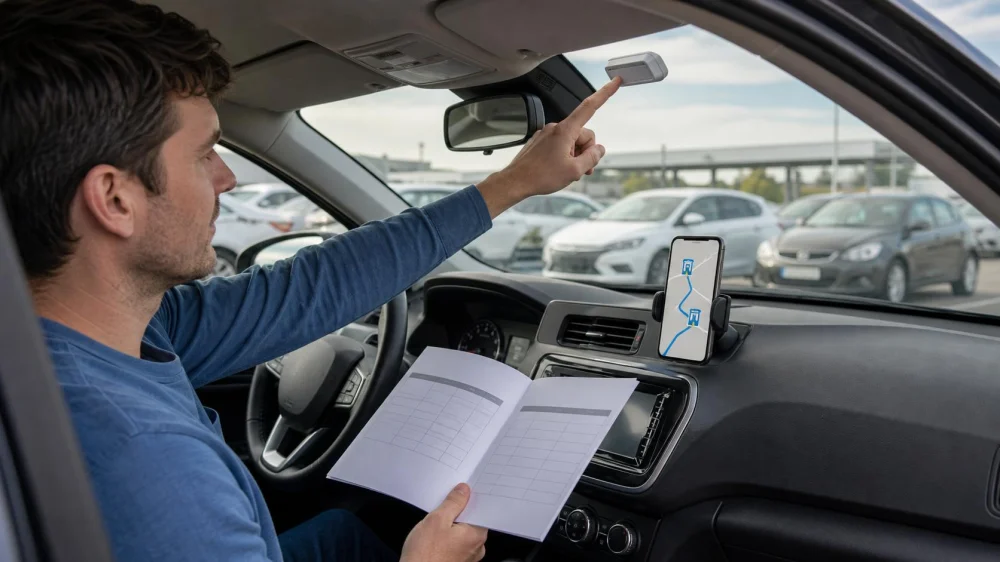
Before driving a rental car on a U.S. toll road, identify the rental company's toll program, every service or convenience fee, when those fees apply, and whether you may use a personal transponder or direct plate-payment option. Compare the full rental-period cost with your planned route, not just the posted toll. Photograph the transponder position, save the agreement and route records, and verify charges through official channels after return.
This guide provides a planning framework, not a quote or legal interpretation. Toll agencies, roads, states, rental companies, vehicle classes, transponder networks, discounts, and billing windows differ and can change. Written terms from the rental company and official toll operator control the trip.
How rental car tolls work
Many U.S. toll facilities use an electronic transponder, a camera image of the license plate, or both. When a rental vehicle's plate is recorded, the toll operator may identify the registered owner as the rental company or fleet provider. The rental company or a contracted toll service can then match the transaction to the renter and charge the payment method linked to the agreement.
A rental car toll program may include the actual toll plus a daily, per-use, per-rental, or other service fee. Some plans charge for every rental day after one toll is used; others may charge on days the device is available or for an all-inclusive period. Do not assume the visible transponder is free or that the toll itself is the final cost.
Cashless tolling means there may be no booth where a driver can stop and pay. A lane marked for a particular account, occupancy, or vehicle class may have different rules. Follow road signs safely and never stop or reverse in a travel lane to avoid a toll.
Compare the payment options
Ask which of these choices actually applies to the vehicle and route:
- Rental-company transponder program: Convenient when coverage matches the route, but service fees and activation rules can change the total.
- Rental-company plate billing: The plate image is matched after travel. The renter may owe the toll plus administrative or service charges.
- All-inclusive toll plan: A fixed daily or rental-period price may simplify budgeting, but it can cost more when toll use is light.
- Personal transponder: Some rental agreements and toll agencies allow one to be temporarily associated with a rental plate; others restrict it or require a specific mounting and account setup.
- Direct toll-agency visitor or plate account: Some regions offer short-term accounts before or shortly after travel. Eligibility and deadlines vary.
- Cash or card at a staffed/automated point: This remains available on some facilities but should never be assumed.
Compare expected tolls, rental-program fees, days of activation, exchange-rate or card fees for international travelers, and the cost of a route that avoids tolls. A toll-free route may add distance, fuel, parking time, or schedule risk.
Check the route before booking
- Map the full trip. Include airport access, bridges, tunnels, express lanes, hotel routes, day trips, and the return location.
- Identify the official operators. Use state transportation or toll-agency websites rather than a third-party estimate alone.
- Check payment methods. Confirm transponder network, plate payment, cash availability, vehicle class, rental-car rules, and visitor options.
- Check time and lane rules. Managed lanes may vary by time, occupancy, direction, or vehicle type.
- Estimate use by day. This matters when the rental program charges daily service fees.
- Build two budgets. Compare the rental-company plan with every permitted alternative, including toll-free routing.
Take a screenshot or save the official rules you relied on, with the date and page address. Do not assume a navigation app's “avoid tolls” setting recognizes every tolled express lane or recently changed road.
Questions at pickup
Before leaving the lot, ask the agent to show you the written toll terms and answer:
- Is a transponder installed, and is it active, switchable, or stored in a shielded box?
- What action activates the program: opening the box, moving a switch, or simply passing a toll point?
- What is the actual toll rate used—cash, plate, electronic, discounted, or another rate?
- Which service fees apply per day, per toll, per rental, or after a missed direct payment?
- Are fees charged on days without toll travel?
- Which states, roads, bridges, tunnels, and transponder networks are covered?
- May a personal transponder be used, and how should the rental plate and dates be registered?
- How do you prevent two transponders from reading at the same toll?
- When will transactions appear, and how can a charge be documented or disputed?
Photograph the vehicle plate, dashboard or windshield area, transponder position or switch state, and the relevant agreement page without exposing personal payment details. If an agent gives an oral answer that conflicts with the contract, request written clarification before driving.
During and after the trip
Drive according to posted signs and do not handle a transponder while moving. Record the date, approximate time, road, direction, entry or exit, and vehicle occupancy for each toll segment when practical. Save official receipts or account confirmations.
If navigation unexpectedly enters a toll facility, continue safely. Do not stop, back up, cross barriers, or make an illegal maneuver. When parked, check the official operator's rental-vehicle payment options and the rental agreement.
At return, photograph the odometer, plate, transponder state, parking location, and receipt. Keep the rental agreement and toll records until the final rental and toll charges have settled. Toll transactions may post after the ordinary rental receipt.
Limitations, disputes, and scams
If a charge looks wrong, compare the transaction date, time, road, vehicle plate, rental period, toll amount, and each separate service fee. Contact the rental company's documented toll administrator first and keep a case number. A toll operator may not be able to change a rental-company service fee.
Unexpected text messages about overdue tolls can be phishing attempts. The Federal Trade Commission advises checking directly with the toll agency using a website or phone number you know is genuine, not the link or contact information in the message. Do not provide payment details through an unverified message.
Dispute deadlines and evidence requirements vary. Save screenshots, receipts, account statements, the rental contract, vehicle photos, and communication. Do not ignore a verified notice, but do not rush to pay through an unofficial channel.
Sources and evidence notes
The Federal Trade Commission rental-car guidance explains that toll programs can add daily, rental-period, or per-use service fees and recommends comparing total costs. The Federal Highway Administration explains that all-electronic tolling can use transponders and license-plate cameras. Current rental and toll-operator terms must be checked for the actual trip.
Frequently asked questions
Can I use my own toll transponder in a rental car?
Sometimes, but permission, plate registration, mounting, network compatibility, dates, vehicle class, and duplicate-read prevention vary. Confirm with both the rental company and toll account provider before travel.
Will closing the rental transponder prevent all fees?
Not necessarily. A plate camera may still record the car, and the contract may apply a toll program or fee. Confirm the device state and plate-billing rules in writing.
Does “avoid tolls” in navigation guarantee a toll-free route?
No. Map data, managed lanes, temporary routing, and road changes can create errors. Review the route and road signs, and avoid last-second maneuvers.
Why did a toll charge arrive after the final rental receipt?
Electronic toll transactions may be matched and billed after the vehicle return. Check whether the charge date falls within the rental period and whether separate service fees match the agreement.
Should I pay an overdue toll text immediately?
No. Do not click the message link. Verify the claim through the official toll agency or the rental company's documented toll administrator using independently obtained contact information.
Next steps
Map the route, list every likely toll operator, and obtain the rental company's written toll terms before booking. Compare actual tolls plus all service fees with permitted personal-transponder, visitor-account, and toll-free options. At pickup, photograph the plate and transponder state. After return, keep records, review delayed charges carefully, and verify any message through official channels.






 SIXT Rent a Car Miami Coral Gables Miracle Mkt4.0 (605 reviews)
 CAL MOBILITY0.0 (0 reviews)
 Enterprise Rent-A-Car4.0 (620 reviews)
 VELOCITY Luxury and Classic Rentals5.0 (4 reviews)
 Avis Car Rental3.0 (141 reviews)
 Hertz Car Rental2.0 (13 reviews)
 Car Rental vs. Public Transportation: Which Is More Cost-Effective?
 Is Turo Car Rental Legit? Everything You Need to Know
 Car Rental for Road Trips: How to Choose the Best Route and Vehicle
 Does Mastercard Provide Car Rental Insurance?
 How Much is Thrifty Car Rental Deposit? A Comprehensive Guide
 Renting a Car with a Debit Card: Everything You Need to Know