
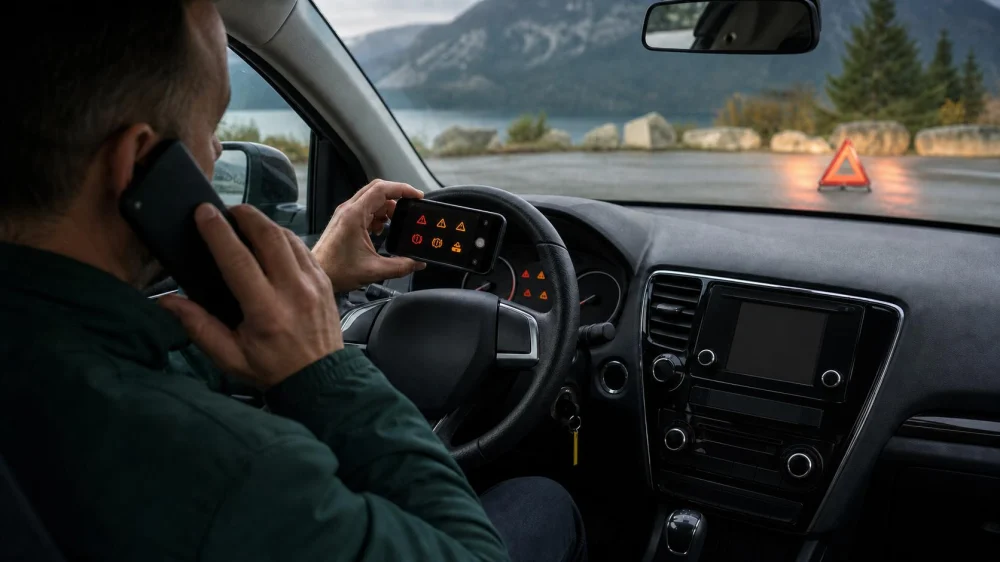
Rental Car Warning Light: Stop, Document, and Call
Table of contents
Quick answer
When a warning light appears in a rental car, stay calm, reduce risk, and pull over in a safe legal place when conditions allow. Check for smoke, unusual noise, loss of control, overheating, or braking problems. Photograph the display and mileage, consult the vehicle manual, then call the rental company’s verified roadside number. Do not erase codes, open a hot cooling system, or continue driving against safety instructions.
Your first response
- Keep control. Hold a steady course, avoid abrupt inputs, and assess traffic.
- Notice vehicle behavior. Check steering, braking, power, temperature, sound, odor, and visible smoke without staring at the display.
- Choose a safer place. Exit active travel lanes when possible. Use hazard lights as conditions and local law require.
- Stop and secure. Park, set the brake, and move occupants away from traffic only when it is safer to do so.
- Get emergency help. Call emergency services for a fire, crash, medical emergency, dangerous road position, or immediate threat.
Do not attempt to read a manual or take pictures while driving. If stopping immediately would create a greater hazard, reduce speed and reach the nearest safer location unless the car is uncontrollable or on fire.
Use color and behavior as clues
Warning symbols vary by make and model. Red often signals urgent attention, while amber or yellow commonly means a fault needs checking, but color alone is not a diagnosis. A flashing light may be more urgent than a steady one. The vehicle manual explains the exact symbol and required response.
Treat vehicle behavior as important evidence. Loss of braking or steering, rising temperature, severe vibration, smoke, burning odor, or a rapidly deflating tire can demand an immediate stop even if the symbol looks unfamiliar. Never assume a rental employee previously knew about the light.
What to document
- Photo of the full instrument cluster while safely parked
- Close photo of the symbol and any message
- Odometer, fuel or charge level, and time
- Road and approximate location
- Weather and driving conditions
- Sounds, smells, vibration, or performance changes
- When the light appeared and whether it stayed on, flashed, or disappeared
- Names, call times, and instructions from the rental or roadside agent
Keep documentation factual. Do not speculate about the cause when reporting the problem.
Call the rental company
Use the roadside number on the rental agreement, key tag, official app, or company website. Avoid unverified search ads. Provide the agreement number, vehicle description, exact location, warning message, and symptoms. Ask:
- Should the engine remain off?
- Is the vehicle authorized to be driven, and if so, how far?
- Will roadside assistance, towing, or a replacement be arranged?
- Where should occupants wait?
- What expenses are authorized and what receipts are required?
- How will the incident be recorded on the rental agreement?
Repeat important instructions back and request written confirmation through the official app, email, or text channel when available.
If you are stranded
Prioritize personal safety over the car. Remain behind a protective barrier or in another safe area when advised; road shoulders are dangerous. Do not stand between vehicles or beside moving traffic. Tell the dispatcher about children, mobility needs, extreme heat or cold, and unsafe surroundings.
If towing is arranged, confirm the company, destination, and whether you must remain with the vehicle. Remove personal belongings only when safe and document its condition before handoff.
What not to do
- Do not disconnect the battery or use a scanner to erase fault codes.
- Do not add unknown fluids or open a hot radiator or coolant cap.
- Do not authorize major repair without rental-company approval except emergency action required by law.
- Do not keep driving solely to avoid changing travel plans.
- Do not leave keys in an unsecured car or abandon it without instructions.
- Do not post agreement details, location, or personal data publicly.
Return and follow-up
At exchange or return, ask the agent to record the warning light and your earlier report. Photograph the vehicle, fuel or charge level, mileage, and return location. Save roadside records, towing paperwork, receipts, and the closed rental receipt. Review later charges and dispute errors through the rental company’s documented process.
Limits and emergency signs
This guide cannot identify a dashboard symbol or decide whether a specific vehicle is safe to drive. The owner’s manual, emergency responders, rental provider, and qualified technician control those decisions. Stop as safely as possible and call emergency services for fire, smoke, loss of braking or steering, crash injuries, fuel leakage, or a dangerous roadway position. Never enter traffic to inspect a vehicle.
Frequently asked questions
Can I drive with a check-engine light?
It depends on whether it is flashing, the vehicle’s behavior, and manufacturer guidance. Safely stop, document it, and get instructions from the rental company.
Should I buy a code reader?
No purchase is normally needed for a rental. Do not clear codes; let the authorized provider arrange diagnosis.
Who pays for towing?
Responsibility depends on the agreement, coverage, cause, and authorization. Ask before approving service and keep all records.
What if the light turns off?
Document and report it anyway. An intermittent warning can still need assessment, and the company should decide the next step.
Sources
Use the rented vehicle’s owner’s manual for symbol-specific instructions and the rental agreement for roadside and authorization terms. The U.S. National Highway Traffic Safety Administration provides official vehicle-safety resources; state highway and emergency agencies provide local roadside procedures.
Next steps
Before your next rental, save the official roadside number and locate the digital owner’s manual. If a warning appears, make safety the first decision, document it from a parked position, and follow verified instructions.





 Midway Car Rental Brentwood5.0 (161 reviews)
 Enterprise Rent-A-Car4.0 (306 reviews)
 Enterprise Rent-A-Car4.0 (288 reviews)
 Enterprise Rent-A-Car4.0 (653 reviews)
 Avis Car Rental3.0 (188 reviews)
 MK Car Rental, LLC5.0 (4 reviews)
 How Volt Offers a Sustainable Car Rental Solution
 Why Are Car Rental Places Closed on Sunday?
 The Best Car Rental Services for Eco-Friendly Travel
 How Do I File a Complaint with Thrifty Car Rental: A Clear Guide for U.S. Customers
 Best Rental Cars for Business Professionals
 Does Capital One Credit Card Cover Car Rental Insurance in the U.S.?