
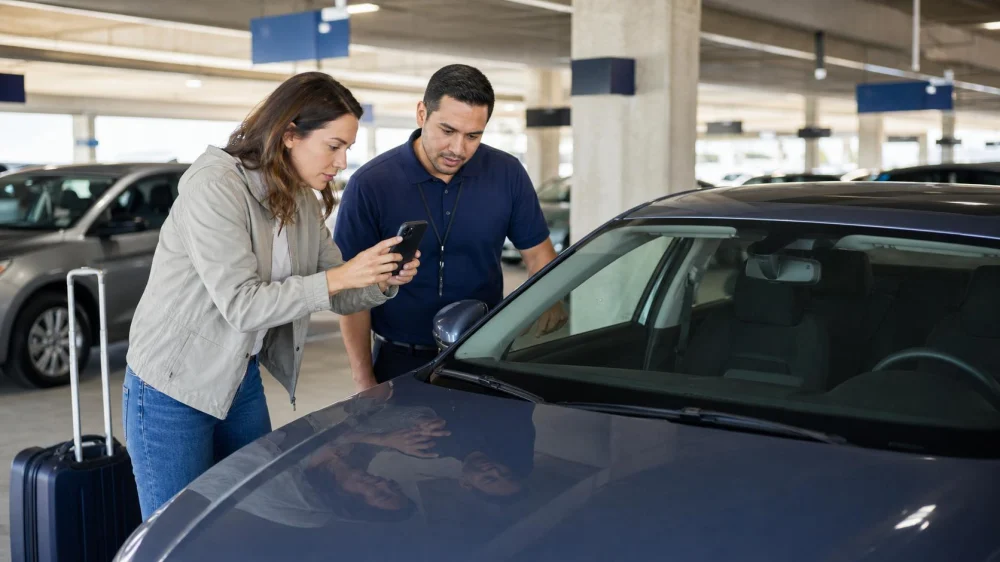
Rental Car Windshield Chip: Document It Before Driving
On this page
- Quick answer
- Why windshield damage matters
- Steps before leaving the lot
- If damage appears during the rental
- When not to keep driving
- Do not arrange repair without approval
- Questions about coverage and charges
- Return and record checklist
- Limitations and important notes
- Sources and evidence notes
- Frequently asked questions
- Conclusion and next steps
Quick answer
If you find a windshield chip or crack on a rental car, photograph it from several angles before driving, keep the vehicle parked, and report it through the rental company’s official channel. Ask whether to exchange the car and obtain written acknowledgment. Do not apply a repair kit, tape, heat, or pressure without authorization. If damage obstructs vision, spreads, or affects safe operation, stop and request roadside instructions.
This guide is for U.S. rentals. Vehicle-safety rules, rental contracts, damage waivers, credit-card benefits, personal insurance, and repair procedures vary. Follow the rental company and appropriate authorities.
Why windshield damage matters
A chip or crack can affect visibility and may spread with vibration, temperature change, body movement, or impact. Modern windshields may also support cameras, sensors, defrosting elements, antennas, or other systems that require model-specific repair and calibration.
The damage is both a safety and documentation issue. A rental company needs to know whether it existed before checkout, occurred during the rental, or changed later. A verbal note without photographs or a reference number can be hard to verify.
The renter should not decide whether a chip is structurally acceptable or repairable. The company controls the vehicle and usually controls the approved inspection and repair process.
Steps before leaving the lot
- Keep the car parked. Do not drive through the exit gate to test whether the damage changes.
- Photograph the context. Take a full windshield view, closer damage views, the vehicle exterior, parking location, mileage, fuel or charge level, and identifying rental details without publishing personal data.
- Use scale carefully. Place a card or coin near the glass without touching the damaged point when safe; do not press it against the chip.
- Report immediately. Contact the desk, lot attendant, or official support number or app.
- Request written acknowledgment. Obtain a revised condition report, message, email, photo upload confirmation, or case number.
- Ask for a replacement. Confirm whether the car should be exchanged rather than accepted.
- Inspect the replacement. Repeat the complete walk-around before leaving.
If damage appears during the rental
Pull over safely and park. Photograph the damage, surroundings, time, mileage, weather, and any known event such as road debris. Do not stand in traffic or on an unsafe shoulder for documentation.
Call the rental company’s official roadside or damage-report number. Explain the damage location, size impression, whether it is spreading, visibility, warning lights, and any sensor or wiper problem. Follow instructions about driving, towing, exchange, police report, and where the vehicle should go.
If another vehicle or incident is involved, follow local crash-reporting and safety requirements and the rental contract. Do not delay emergency care to contact the rental company.
When not to keep driving
Do not continue if the crack obstructs the driver’s field of view, is rapidly spreading, affects wiper operation, causes loose glass or water entry near electronics, follows a major impact, or the company or authorities instruct you to stop.
Also stop for new camera or driver-assistance warnings, abnormal wind noise, severe glare or distortion, or inability to see safely in current weather. Move to a safe location and request roadside support.
A small chip does not give the renter authority to keep driving. Report it and follow the company’s model-specific decision.
Do not arrange repair without approval
Retail windshield kits and third-party repair services may affect the damage, cameras, warranty, evidence, and rental contract. Never drill, inject resin, apply pressure, heat the glass, or use a home remedy.
If the company authorizes repair, obtain the shop, scope, payment method, documentation, and calibration requirements in writing. Keep receipts and before-and-after photographs. Confirm who pays upfront and whether reimbursement is guaranteed or subject to review.
Do not assume a repair that looks clear is complete. Vehicles with windshield-mounted sensors may need inspection or calibration under manufacturer procedures.
Questions about coverage and charges
Ask the rental company:
- Was the damage recorded before your rental began?
- Which agreement section or protection product applies?
- Is there a deductible, administrative fee, loss-of-use charge, or other potential amount?
- What documents will be provided for a claim?
- Should you notify personal auto insurance or a credit-card benefit administrator now?
- What is the deadline and process for disputing a charge?
Coverage can depend on the rental agreement, accepted or declined protections, card used, country, vehicle class, authorized drivers, reporting, and exclusions. Contact each provider rather than assuming benefits overlap.
Return and record checklist
- Return to the location or service point the company instructs.
- Photograph the vehicle, windshield, mileage, fuel or charge, and parking position.
- Request a final receipt and damage-status document.
- Save the original condition report, messages, case numbers, call log, photos, and receipts.
- Monitor the payment card and rental account for later charges or requests.
- Respond through official channels and keep copies of every submission.
Limitations and important notes
- Do not touch a chip to test whether it is deep or loose.
- Temperature changes and defroster use can affect damaged glass; ask for company instructions.
- Phone photos support documentation but do not determine when damage occurred.
- Driver-assistance sensors make windshield replacement more than a glass-only task on some vehicles.
- Contract and state-law questions may require insurer or legal guidance.
Sources and evidence notes
This article reflects general rental-vehicle and auto-glass practice: document condition before use, report damage promptly, avoid unauthorized repair, stop for visibility or structural concerns, and preserve claim records.
Use the rental agreement, official roadside channel, vehicle manual, insurer or card-benefit documents, and qualified auto-glass professionals. No vehicle is declared safe and no coverage outcome is guaranteed here.
Frequently asked questions
Should I accept a rental car with a small chip?
Report it before driving and ask the company whether to exchange the car. Obtain written acknowledgment if the company instructs you to accept it.
Can I put clear tape over the chip?
Not without rental-company authorization. Tape can affect evidence, visibility, moisture, or repair.
Who pays for a chip caused by road debris?
Responsibility and coverage depend on the contract, protections, insurance, card benefits, facts, and law. Report promptly and request claim documents.
What if the crack grows overnight?
Do not keep driving. Photograph the change and call the rental company’s roadside channel for exchange or towing instructions.
Do I need a police report?
It depends on the incident, location, rental contract, and company instructions. Follow local law and official reporting guidance.
Conclusion and next steps
Treat rental-car glass damage as a safety and documentation issue. Keep the car parked, photograph the chip or crack, report it through an official channel, and ask for a replacement or written direction. Never repair rented glass on your own, and stop driving when vision, glass condition, wipers, or sensors are affected.





 Enterprise Rent-A-Car3.0 (123 reviews)
 Tiesto TLC Car Rental4.0 (158 reviews)
 Avis Car Rental3.0 (238 reviews)
 Enterprise Rent-A-Car3.0 (88 reviews)
 Enterprise Rent-A-Car3.0 (42 reviews)
 Enterprise Rent-A-Car4.0 (214 reviews)
 Does National Car Rental Accept Debit Cards? | Car Rental Payment Options
 Best Rental Cars for Long Distance Driving Comfort in the US
 Which Credit Card Has the Best Car Rental Insurance? | Expert Guide
 How to Extend Hertz Car Rental the Right Way in the U.S.
 Can You Use Southwest Points for Car Rental?
 How to Get a Cheap Car Rental: Tips for Saving on Your Next Rental