
Rental Cars in Winter: Verify Tires, Chains, and Restrictions
On this page
Quick answer
Before renting for winter travel, check official road and traction-control rules for the full route, then confirm the actual vehicle's tire type, tread, drivetrain, chain compatibility, rental-contract restrictions, and included equipment. Inspect everything before leaving. All-wheel drive does not shorten braking distance or replace winter-capable tires, legal traction devices, lower speed, extra following distance, or a plan to delay travel.
A winter-ready rental is a vehicle whose tires, equipment, condition, and contract fit the expected temperature, precipitation, elevation, and local rules. A vehicle category or “SUV” label does not prove that the actual car at pickup meets those needs.
Check the route before booking
Map primary and alternate routes, noting mountain passes, unmaintained roads, steep grades, and areas with limited service. Review official state transportation and weather sources close to departure because chain controls, closures, and forecasts change quickly.
- Ask the rental location whether winter tires or traction devices are offered and guaranteed.
- Confirm whether driving on specific roads, into other states, or across a border is permitted.
- Read contract language about chains, tire damage, underbody damage, towing, roadside help, and weather closures.
- Check whether the reserved class can change at pickup and what happens if the replacement does not meet the trip requirement.
- Build a delay, alternate transport, or lodging option into the plan.
Understand the tire setup
All-season, all-weather, and winter tires are not identical. Sidewall symbols, size, load and speed ratings, tread depth, condition, and temperature performance matter. Ask the rental representative to identify the installed tire, then inspect all four tires rather than relying on the booking description.
Look for uneven wear, cuts, bulges, exposed cords, objects, sidewall damage, and visibly low pressure. Confirm the tire-pressure placard and how the monitoring system works. Cold weather can reduce displayed pressure, but do not inflate by guesswork; follow vehicle and rental instructions.
Matching tires are preferable for predictable behavior. A temporary spare or inflation kit has limited capability and may not solve a winter-road problem. Locate it and understand the roadside process before departure.
Verify chain or traction-device rules
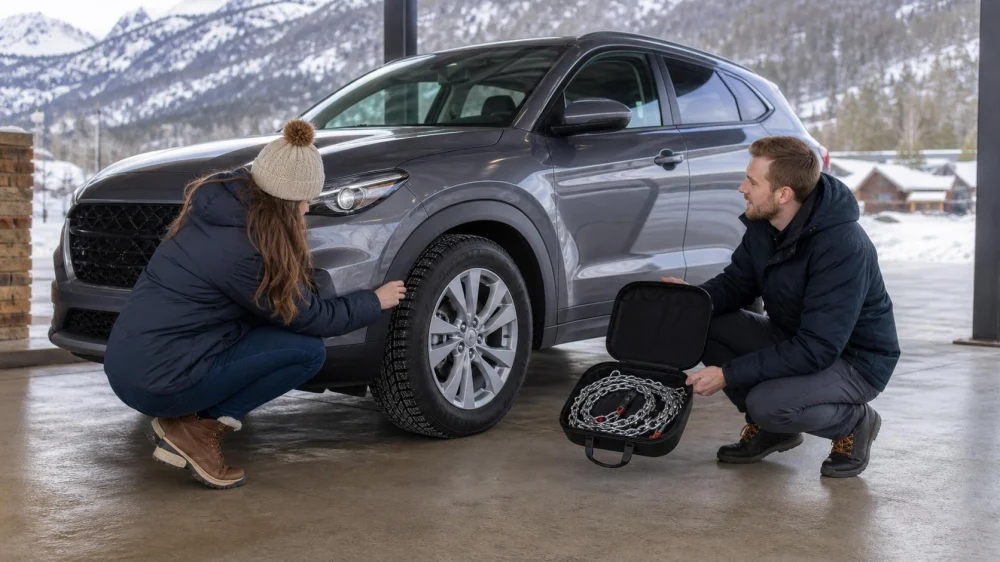
Chain requirements vary by jurisdiction, road, weather stage, vehicle, tire rating, and drivetrain. Use current official instructions for the route. A sign may require carrying devices even when they are not yet installed.
Before obtaining chains or cables, confirm three separate permissions:
- Road authority: the device type satisfies the current control level.
- Vehicle manufacturer: the exact tire size, axle, and wheel-well clearance permit that device.
- Rental agreement: installation and use are allowed and any damage responsibility is understood.
Never assume a universal chain size or installation axle. Practice only where permitted, using the device instructions, before reaching a storm. Do not install devices in a live traffic lane or on an unstable shoulder; use designated chain-up areas or qualified help.
Inspect the vehicle at pickup
- Photograph the vehicle condition according to rental policy, including wheels, tires, glass, lights, and lower panels.
- Confirm tire markings, visible tread, inflation warnings, and matching condition.
- Test headlights, brake lights when assistance is available, defrosters, heater, wipers, washer fluid, mirrors, and cameras.
- Locate the scraper, traction devices, jack or inflation kit, tow point information, and roadside number if included.
- Learn the drive-mode, stability-control, hill-descent, parking-brake, and driver-assistance controls without disabling safety systems casually.
- Request another vehicle or written resolution for warning lights, damaged tires, missing required equipment, or incompatible chains.
Build a conservative driving plan
Clear all windows, roof, lights, sensors, and plates before moving. Accelerate, steer, and brake gradually; reduce speed before curves and grades; and leave substantially more space than on dry pavement. Cruise control may be unsuitable on slippery roads—follow the manual and conditions.
All-wheel drive can help distribute power during acceleration, but every vehicle still depends on tire grip for turning and stopping. Four-wheel drive does not create extra road friction.
Keep fuel or charge margin, warm clothing, water, and a charged phone. Tell someone the route and expected arrival. If official guidance says not to travel, visibility collapses, tires lose grip, or fatigue builds, use a safe exit and stop at a secure location rather than pressing onward.
Winter rental checklist
- Route, elevation, forecast, closures, and traction controls are checked.
- Rental contract permits the route and any required device.
- Actual tire type, size, condition, and pressure guidance are verified.
- Chains or alternatives satisfy road, vehicle, and rental requirements.
- Visibility, heating, lighting, wipers, and washer systems work.
- Roadside assistance and safe chain-up procedures are known.
- Emergency supplies, fuel or charge margin, and delay options are ready.
- The trip will be postponed when official or observed conditions are unsafe.
Limitations and stop rules
Weather, road rules, and fleet equipment are time-sensitive. This guide cannot verify current conditions, chain requirements, or the tires on a specific rental. Recheck official sources and inspect the assigned vehicle.
Do not drive with a damaged tire, unresolved pressure warning, missing required traction device, obstructed visibility, incompatible chain, or active closure. Never crawl under a vehicle on snow or ice, spin tires aggressively, or use a device that contacts brakes, suspension, bodywork, or wiring.
After a slide, curb strike, chain failure, or pothole impact, stop in a safe place and contact the rental company or roadside service. Continuing can worsen hidden tire, wheel, steering, or underbody damage.
Sources and evidence notes
The advice uses broad winter-driving practice: tire grip affects acceleration, turning, and braking; traction-device fit is vehicle-specific; rules are route-specific; and conservative speed and spacing are essential. It does not rank a rental company or guarantee a vehicle's suitability.
Use official state transportation and weather agencies, the vehicle manual, tire and traction-device instructions, the signed rental agreement, and current rental-location confirmation as primary sources.
Frequently asked questions
Does an SUV rental include winter tires?
Not necessarily. SUV describes a vehicle type, not installed tire capability. Confirm the actual tires and any guarantee with the pickup location.
Can I put my own chains on a rental car?
Only when the road authority accepts them, the vehicle manual permits them for that tire and axle, and the rental contract allows use. All three conditions matter.
Is all-wheel drive enough for snow?
No. It can aid acceleration, but tires provide the grip for braking and steering. Road rules may still require traction devices, and conditions can exceed safe travel.
What if the reserved winter equipment is unavailable?
Do not accept an unsuitable setup and hope to buy a solution later. Ask for another vehicle, another location, a documented refund or change, or use the backup transport plan.
Should tire pressure be raised before mountain travel?
Do not guess. Follow the vehicle placard and manual, check pressures under the specified conditions, and have the rental location address warnings or damaged tires.
Conclusion and next steps
Check the route and contract first, then call the pickup location with the required tire and traction-device details. At pickup, verify the actual vehicle rather than the reservation category. When equipment, rules, or weather do not align, delay or change the trip—the most important winter feature is a safe alternative.




 America's Xpress Rent A Car4.0 (197 reviews)
 Enterprise Rent-A-Car4.0 (225 reviews)
 Enterprise Rent-A-Car4.0 (221 reviews)
 Renta de carros miami0.0 (0 reviews)
 Avis Car Rental3.0 (56 reviews)
 Voy Car Rentals5.0 (6 reviews)
 How to Get from Car Rental to Providence Airport – Easy and Fast Guide
 Renting a Car in Orlando During Peak Season: What to Expect
 How to Start a Car Rental Business: A Comprehensive Guide for Beginners
 How to Get the Best Car Rental Deal in the U.S.
 Is Enterprise a Good Car Rental Company? A Comprehensive Review
 How to Return Your Rental Car on Time and Avoid Extra Charges