
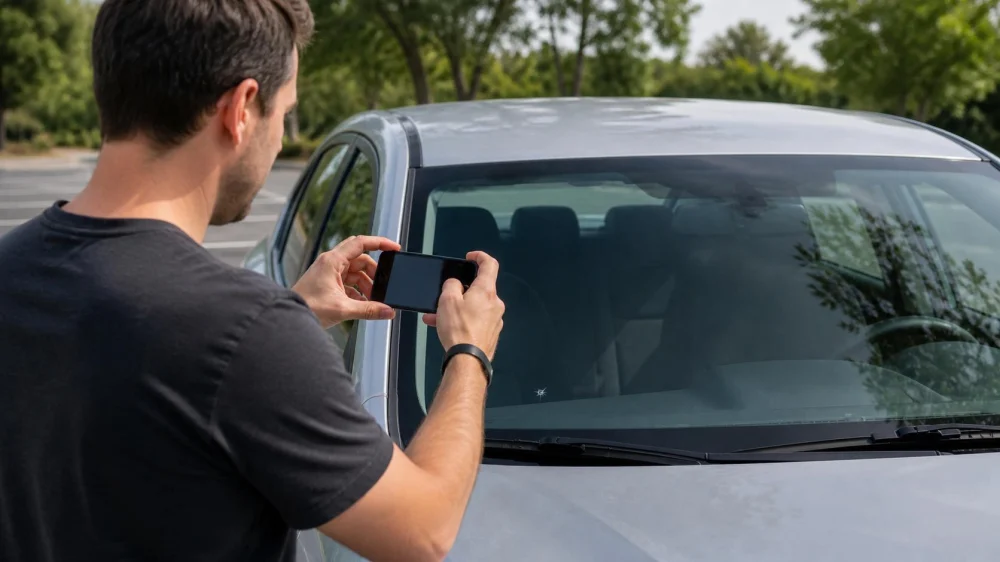
Windshield Chip in a Rental Car: Report Before Driving
On this page
Quick answer
If you find a windshield chip or crack in a rental car, park safely and check whether it blocks vision, reaches an edge, spreads, leaks, or affects sensors. Photograph it from inside and outside, note when and where it appeared, and call the rental company before driving farther, applying a repair kit, or arranging unauthorized glass work.
Understand why glass damage needs prompt reporting
A small impact mark can remain stable or develop into a longer crack as temperature, vibration, body movement, or moisture changes. Damage near the driver’s view, an edge, a camera or sensor area, or a structurally important zone can create additional safety and calibration concerns. A photograph alone cannot determine whether the car is safe to drive.
This guide is for U.S. rental-car drivers who notice windshield damage during a booking. It is not a glass inspection, legal opinion, or coverage decision. State roadworthiness rules, rental agreements, protection products, credit-card benefits, insurance policies, weather, and vehicle sensor systems vary.
Practical checklist
- Move the vehicle to a safe legal location and inspect only while parked, with hazards addressed first.
- Check whether the mark obstructs the driver’s view, has radiating cracks, reaches an edge, leaks, or changes rapidly.
- Note cameras, rain sensors, heating elements, displays, tint, or other equipment near the damage without touching them.
- Take wide and close photos from inside and outside, using a plain object for scale only when it will not contact the glass.
- Record date, time, location, weather, road condition, known impact, odometer, and whether the damage existed in pickup evidence.
- Contact the rental company’s authorized support and ask whether to stop, exchange, tow, or visit an approved provider.
- Save the case number, agent instructions, branch, tow, inspection, replacement, and payment records.
Step-by-step plan
- Protect passengers and visibility; do not continue merely to reach the original destination when the glass may be unsafe.
- Avoid pressing, scraping, heating, cooling, taping over sensors, or washing the damaged area aggressively.
- Review the rental agreement and pickup photos, then report facts without guessing about cause, liability, or repair cost.
- Repeat the company’s instruction back and ask for written confirmation of driving distance, provider, exchange, and expense handling.
- Use only the authorized repair or replacement path and confirm whether driver-assistance cameras require calibration.
- At handoff, photograph the vehicle, keys, fuel or charge, damage, receiving person or tow provider, and final documents.
Keep original time-stamped photos, pickup evidence, weather and route notes, calls, messages, agreement, protection documents, inspection findings, receipts, and handoff confirmation. Do not edit the only copy of an image or discard a small fragment if authorities or the rental company instruct you to preserve it safely.
Limits and important notes
Do not drill, fill, tape, polish, or apply a store-bought repair kit without authorization. Do not pour hot water on cold glass, blast defrost directly to force a temperature change, or place hands near broken edges. A temporary-looking solution can alter evidence, interfere with sensors, or make professional repair less effective.
Stop driving and request qualified help when the crack blocks vision, spreads quickly, reaches an edge, creates loose glass, follows a major impact, leaks into electronics, or affects driver-assistance sensors. Call emergency services for a crash, injury, shattered glass, dangerous roadside position, or an object that penetrated the cabin.
Frequently asked questions
Can I drive with a small chip in a rental windshield?
Only after considering location, symptoms, local law, vehicle guidance, and rental-company instruction. Small size alone does not establish safety.
Should I use a windshield repair kit?
No, not without rental-company authorization. The repair may affect evidence, coverage, sensor calibration, and whether professional resin work remains possible.
Who pays for the glass damage?
Responsibility depends on the agreement, cause, optional products, insurance, and documentation. Report promptly and request itemized records rather than assuming.
What if the chip was present at pickup?
Provide the original pickup photos or report and notify the company immediately. Preserve metadata and avoid arguing about cause before records are reviewed.
Does a windshield camera need recalibration after replacement?
Many driver-assistance systems have model-specific calibration requirements. The rental company and approved glass provider should confirm the procedure.
Sources and evidence
Use the signed rental agreement, pickup inspection record, vehicle owner’s manual, rental company’s official incident process, and authorized glass-provider findings. State motor-vehicle authorities establish visibility and roadworthiness rules. The rental company, insurer, or benefit administrator determines coverage from the applicable contract and evidence.
Conclusion and next steps
Treat glass damage as both a visibility question and a documented rental incident. Park, assess obvious danger, photograph the mark, preserve pickup evidence, and contact authorized support before driving or repair. A clear case number and handoff record protect safety and make later coverage review more factual.





 Acts From The Heart LLC4.0 (10 reviews)
 Enterprise Rent-A-Car4.0 (442 reviews)
 Enterprise Rent-A-Car4.0 (149 reviews)
 Enterprise Rent-A-Car4.0 (225 reviews)
 Enterprise Rent-A-Car4.0 (213 reviews)
 The London Exotics: Detroit5.0 (2 reviews)
 Profitable Car Rental Business: A Beginner's Guide to Success
 Everything You Should Know About Car Rental Security Deposits
 How to Start a Car Rental Business: A Step-by-Step Guide
 How to Avoid Overpaying for Rental Car Insurance Without Hidden Fees
 What Car Rental Companies Accept Debit Cards – A Guide for Travelers
 Does Car Rental Require Credit Card? Explore Payment Options and Alternatives