
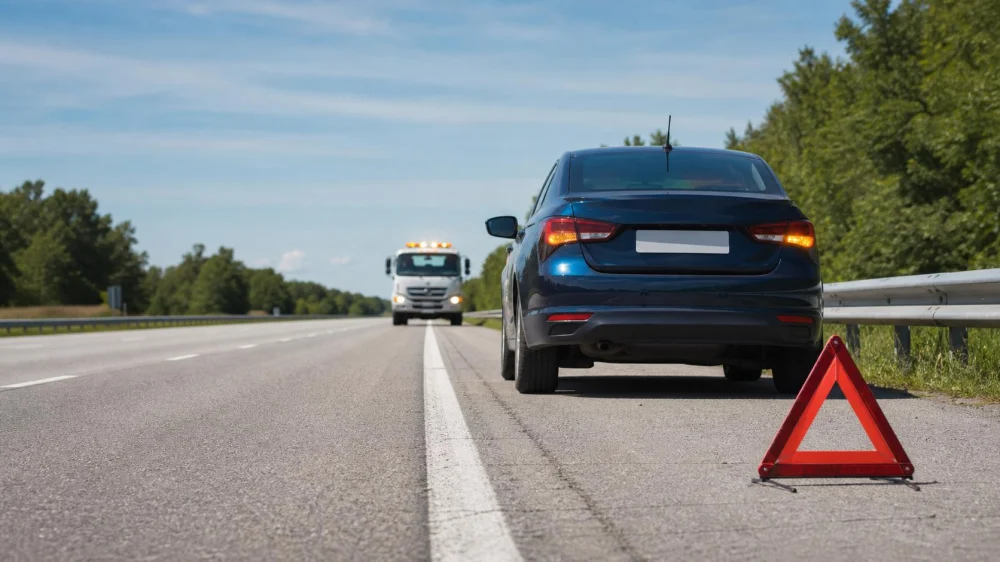
Rental Car Breaks Down: What to Do Safely
On this page
Quick answer
If a rental car becomes unsafe or cannot continue, move out of traffic only when you can do so safely, turn on hazard lights, and call emergency services for immediate danger. Then contact the rental company’s roadside number and follow its instructions before approving repairs or towing. Record the location, dashboard warnings, vehicle condition, calls, receipts, and authorization numbers.
What counts as a rental-car breakdown?
A rental-car breakdown is a mechanical, electrical, tire, key, or fuel-related problem that prevents normal use or makes continued driving unsafe. A collision is different and may require a separate accident-reporting process, police report, and insurance notification under the rental agreement.
This guide covers general United States rental practice. Your contract, rental company, roadside plan, vehicle manual, state law, road authority, and emergency instructions control the actual response. Never keep driving solely to avoid a fee when the vehicle may be unsafe.
First safety actions
- Stay calm and reduce risk. Signal, slow gradually, and move to a safe legal location if the vehicle still responds and doing so is safer than stopping in a traffic lane.
- Make the vehicle visible. Use hazard lights. Follow local rules and use warning devices only when you can place them without entering dangerous traffic.
- Choose the safer waiting place. Whether occupants should remain belted inside or move behind a barrier depends on traffic, fire risk, weather, and official instructions.
- Call emergency services when needed. Report a crash, injury, smoke, fire, fuel smell, vehicle in a live lane, or another immediate hazard.
- Do not attempt a risky repair. Avoid working beside fast traffic, crawling under the car, opening a hot cooling system, or touching damaged electrical components.
Best first contact: emergency services for immediate danger; otherwise the roadside number in the rental agreement, app, key tag, or vehicle documents. Not ideal: accepting unsolicited roadside help or arranging an unapproved tow without first checking the contract.
Contact the rental company
Tell the agent your name, rental agreement number, vehicle location, direction of travel, nearby landmark or mile marker, dashboard warnings, and whether all occupants are safe. Describe observations instead of guessing the failed part.
Ask for:
- a case or authorization number;
- the approved roadside or towing provider and expected contact method;
- where the vehicle should be taken;
- whether a replacement vehicle is available and how to reach it;
- which expenses require advance approval and what receipts to keep;
- instructions if you cannot reach the original branch after hours.
Verify the identity of a tow operator before handing over keys. Confirm the vehicle plate, destination, and rental-company dispatch details rather than relying only on a person’s verbal claim.
Document the event
When it is safe, photograph the vehicle from several angles, the dashboard warnings, visible damage, tire condition, fuel level, mileage, and surroundings. Save screenshots of app messages and a call log. Write down the time the problem began, what the car was doing, and what instructions you received.
Keep towing, taxi, rideshare, lodging, fuel, and repair receipts. A receipt does not guarantee reimbursement, but missing documentation can make review harder. Remove personal belongings before the car is towed if it is safe and permitted.
Repairs, towing, and replacement cars
Do not authorize a repair, tire replacement, locksmith, battery service, or tow unless the rental company approves it or an emergency requires immediate action. Rental agreements differ on roadside coverage, driver-caused issues, lost keys, wrong fuel, flat tires, and reimbursement.
Before accepting a replacement car, confirm the updated agreement, fuel level, return location, due time, charges, and how the disabled vehicle will be closed out. Inspect the replacement and report existing damage through the company’s documented channel.
Important limits and special cases
- Flat tire: change it only if the agreement allows it, the vehicle has suitable equipment, and the location is safe. Roadside service is often the safer choice.
- Warning light: a red warning, overheating, loss of braking or steering, smoke, or unusual noise can require an immediate stop. Follow the vehicle manual and rental-company direction.
- Dead battery or locked key: avoid unapproved jump-starts or entry methods that may damage the car.
- No cell signal: seek a safe call point or official help; do not walk along a high-speed roadway unless directed and no safer option exists.
- Collision: protect people first, follow local reporting law, exchange required information, and use the rental company’s accident process.
Sources and evidence notes
These steps reflect broad roadside-safety principles and common rental-contract procedures. Coverage, reimbursement, towing authorization, reporting, and replacement-car rules vary by company, location, vehicle, contract, and cause. The signed rental agreement and live instructions from emergency responders and the rental company take priority.
Frequently asked questions
Who pays for a rental-car breakdown?
It depends on the cause, contract, optional roadside coverage, and authorization. Ask the company to document its decision and keep every receipt.
Can I call my own roadside-assistance provider?
Check the rental agreement and call the rental company first when possible. An outside provider may not be authorized to tow or repair the vehicle.
Should I drive with a warning light on?
Do not assume it is safe. Move out of danger if possible, consult the manual, and contact the rental company. Stop immediately for loss of control, overheating, smoke, or official direction.
What if the rental company does not answer?
Use every documented roadside and after-hours channel. Address immediate danger through emergency or road authorities, record your attempts, and avoid optional repairs without authorization.
Can I leave the keys with the tow driver?
Only after confirming the dispatch and destination with the rental company. Record the driver, provider, time, and where the keys and vehicle are going.
Conclusion and next steps
Protect people first, make the scene visible, call the right responder, and obtain rental-company authorization before spending money or releasing the vehicle. Keep a compact evidence file with photos, case numbers, messages, and receipts until the agreement is fully closed and any charge review is complete.





 Enterprise Rent-A-Car4.0 (374 reviews)
 Enterprise Rent-A-Car4.0 (307 reviews)
 Budget Car Rental3.0 (122 reviews)
 Enterprise Rent-A-Car4.0 (509 reviews)
 Easirent Car Rental Fort Lauderdale Airport (FLL)4.0 (8833 reviews)
 Go Rentals5.0 (4 reviews)
 After-Hours Rental Car Return: A Safe Checklist
 Does Enterprise Car Rental Pick You Up? A Complete Guide
 How Much Is a Long Term Car Rental in the US – Cost Breakdown Guide
 Do Credit Cards Cover Car Rental Insurance? Everything You Need to Know
 Can You Rent a Car Without a Credit Card in the United States in 2026?
 Renting a Car for a City Tour: The Best US Locations to Explore by Car