
Rental Car Fuel Policies: Compare the Real Return Cost
On this page
Quick answer
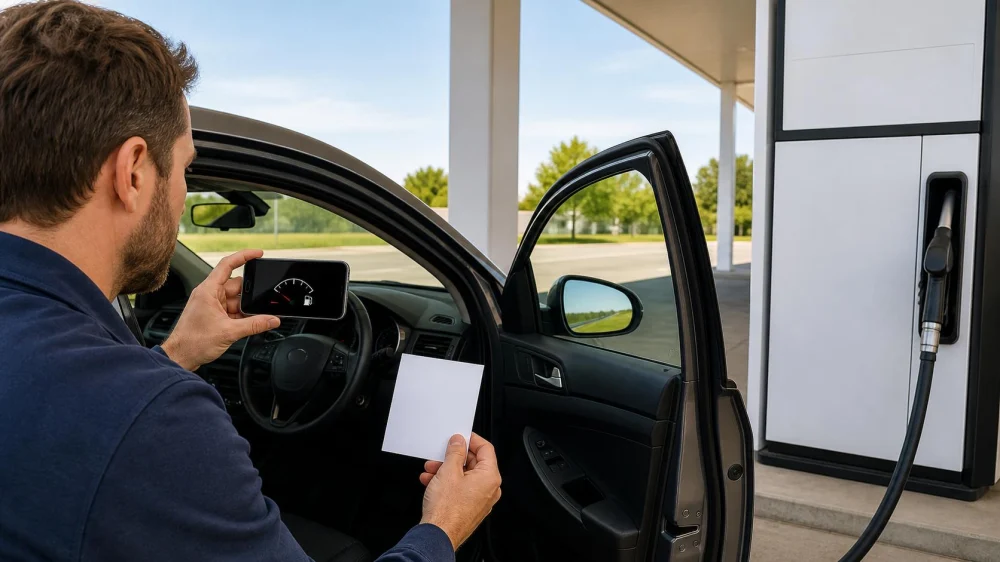
Read the fuel clause before accepting the keys. Confirm the pickup gauge, required return level, fuel grade, prepaid amount, refueling price, and any service charge in writing. Prepaid fuel may save a stop but can cost more when unused fuel is not refunded. Photograph the gauge and mileage at pickup and return, refuel safely near the location when required, and keep the receipt until the final bill is settled.
Compare convenience with the full contract price
Rental fuel options often include returning at the original level, prepaying for a tank, or letting the company refill and charge you. Names and calculations vary. FTC consumer guidance notes that most companies require a full return and that company fuel can cost more than a local station; prepaid fuel may be convenient but more expensive. The practical comparison is the total expected charge, not a single posted per-gallon figure.
This guide is for U.S. renters comparing ordinary gasoline or diesel terms. Electric-vehicle charging follows different contract rules. The signed rental agreement, vehicle label, location instructions, and applicable law control the transaction.
Practical checklist
- Find the fuel clause before signing and ask for a written explanation of every option.
- Confirm fuel type, pickup level, required return level, and how the gauge is evaluated.
- Compare prepaid total with likely trip use, local prices, and whether unused fuel is refunded.
- Ask for the rental company's refueling price and any separate convenience or service fee.
- Photograph the gauge and odometer at pickup before leaving the facility.
- Plan a safe open station near the return route without relying on a last-minute detour.
- Keep a timestamped fuel receipt and photograph the return gauge and mileage.
- Review the final invoice promptly and dispute mismatches with the evidence preserved.
Step-by-step plan
- Estimate trip distance and fuel use without assuming you will return nearly empty.
- Write down each available option's total likely cost, refund rule, and return obligation.
- At pickup, compare the contract fuel level with the dashboard and report a mismatch immediately.
- Use only the fuel grade and filling procedure stated by the vehicle and rental company.
- Before return, refuel to the required level when that is your chosen option and retain the receipt.
- Capture the gauge, odometer, location, and return time before handing over keys.
- Compare the closed agreement or emailed invoice with your selected option and documented return level.
Record reservation and agreement numbers, fuel option, pickup level and mileage, required return level, prepaid total or refill rate, separate fees, fuel type, receipt, return photos, and final invoice. Keep originals until holds and later adjustments are resolved.
Limits and important notes
Dashboard gauges are approximate and may move slowly after fueling. A nearby station receipt supports timing but does not by itself prove the return level. Taxes, airport fees, service charges, and rounding may affect totals. Do not overfill, top off after the pump stops, use the wrong fuel, or carry fuel in an unsafe container to reduce a charge.
Stop driving and contact the rental company if the fuel cap, gauge, warning lights, or required fuel type is unclear. If the wrong fuel is added, do not start the engine; follow roadside instructions. For an unexplained charge, preserve documents and contact the company, card issuer when appropriate, state consumer office, or FTC rather than altering evidence.
Frequently asked questions
Is prepaid fuel always cheaper?
No. It may be convenient, but unused fuel may not be refunded and the total can exceed buying only what you use.
How close to the return location should I refuel?
Follow the contract. Choose a safe station and route that satisfy any distance or receipt rule rather than guessing.
What if the pickup gauge is below the contract level?
Photograph it and report the mismatch before leaving so the agreement can be corrected or documented.
Should I keep the gas receipt after return?
Yes. Keep the receipt, gauge and mileage photos, return confirmation, and final bill until all charges and holds are resolved.
Sources and evidence
The Federal Trade Commission's Renting a Car consumer guide advises comparing total cost, explains that rental-company gas often costs more than local fuel, and notes that prepaid fuel may be convenient but more expensive. The signed agreement and location-specific instructions remain the controlling source for fuel level, pricing, fees, and evidence requirements.
Conclusion and next steps
Before pickup, estimate usage and compare total option costs. At the counter, make the fuel term unambiguous and document the starting level. Follow the chosen return rule, keep the receipt and photos, and match the final invoice to the agreement before deleting any evidence.






 TC Exotic Rental Cars5.0 (3 reviews)
 Le'xotic Car Rental5.0 (1 reviews)
 Enterprise Rent-A-Car3.0 (407 reviews)
 Enterprise Rent-A-Car3.0 (76 reviews)
 Enterprise Rent-A-Car4.0 (277 reviews)
 Top Shine Fleet5.0 (3 reviews)
 How to Save Money on Long-Term Rentals
 Which Car Rental is Better? A Complete Comparison of Top Options
 Is Budget Car Rental Worth It? Exploring the Pros and Cons
 Is Endeavor a Car Rental Company? Find Out Here
 Renting a Car in Cincinnati Ohio: Cost Guide and Smart Budget Tips
 Top 10 Car Rental Locations Near Popular US Tourist Attractions