
Rental Car Roadside Assistance: Scope, Calls, and Receipts
On this page
Quick answer
Before driving away, learn whether roadside assistance is included, optional, or already available through your insurer, credit card, employer, or auto club. Confirm coverage for towing, flat tires, dead batteries, lockouts, lost keys, fuel delivery, and driver-caused problems. During a breakdown, move to safety if possible, call emergency services when needed, then follow the rental company’s authorized process and keep receipts.
Compare before pickup
Ask for the roadside-assistance price, coverage period, call limit, service area, exclusions, deductible, and reimbursement procedure. Identify whether it pays the service provider directly or requires you to pay first. Compare overlapping benefits, but confirm that an outside program will serve a rental vehicle in your destination.
Save the rental location, roadside, accident, and after-hours numbers offline. A phone number printed on a key tag may not be sufficient if the key is lost.
Understand the scope
- Mechanical breakdown and authorized towing
- Flat-tire change or towing when no usable spare is provided
- Battery jump-start
- Lockout and replacement-key delivery
- Emergency fuel delivery, usually excluding fuel cost
- Recovery from mud, snow, or an unsafe location
Optional roadside products often exclude collisions, unauthorized roads, negligence, wrong fuel, lost keys, or costs beyond a limit. Mechanical failures may be handled under the base rental agreement even without optional assistance, so ask how categories differ.
At a breakdown
- Get occupants away from traffic danger when it is safe to do so.
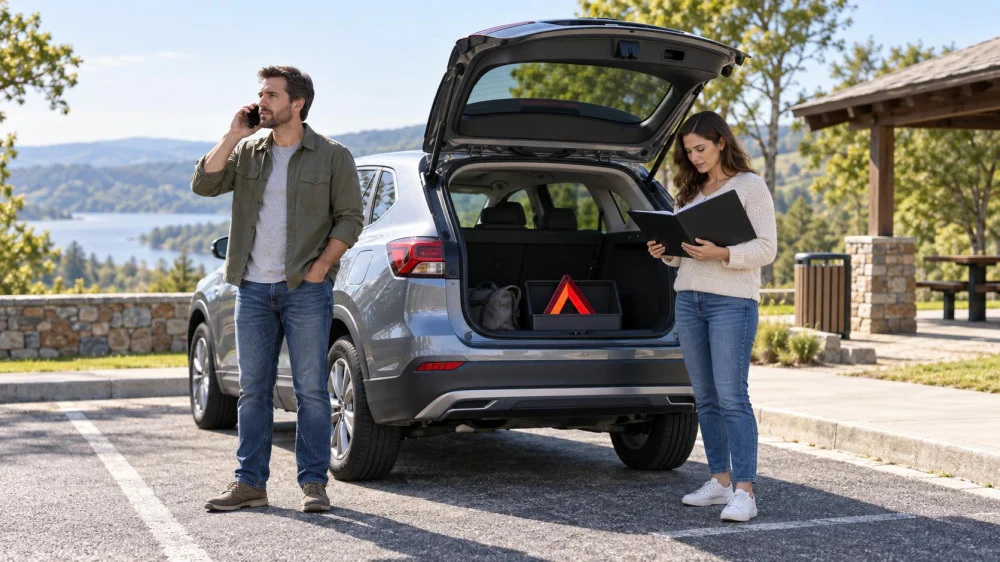
- Use hazard lights and legally required warning equipment.
- Call emergency services for injury, fire, collision danger, or an unsafe location.
- Contact the rental company's official assistance number.
- Describe the location, vehicle, warning signs, damage, and passenger needs.
- Do not authorize repairs or towing unless the agreement or rental company permits it.
Document calls and costs
Record the time, number called, agent name or case number, instructions, provider, arrival time, destination, and charges. Photograph the vehicle and surroundings from a safe position. Keep towing, taxi, hotel, repair, and replacement-vehicle receipts, but do not assume every related expense is reimbursable.
Ask for written confirmation when the company directs you to abandon, tow, repair, exchange, or return the car somewhere different.
Safety comes first
Do not change a tire on a narrow shoulder, stand between vehicles, walk along a high-speed road, or remain in a car exposed to traffic when a safer location is available. Local emergency authorities control immediate scene safety. Never attempt repairs beyond your skill or the rental agreement.
International rentals
Research local emergency numbers, road rules, required safety equipment, mobile coverage, and assistance availability before travel. Personal U.S. auto insurance may not apply abroad, and remote response may take longer. Carry the agreement, license, required permit, and insurer contacts without leaving sensitive originals unattended.
Frequently asked questions
Is roadside assistance the same as insurance?
No. Service for a disabled car and financial protection for damage or liability are different products.
Can I call any tow company?
For immediate danger, follow authorities; otherwise call the rental company first unless the agreement says otherwise.
Who pays for a lost key?
Check exclusions, optional assistance, and key-replacement terms; coverage varies.
What if there is no phone signal?
Prioritize personal safety, seek lawful local help, and document why normal contact was not possible.
Sources and notes
The Federal Trade Commission's rental-car guide recommends asking whether roadside assistance costs extra and what events it covers. The U.S. Department of State provides current guidance on driving and transportation safety abroad, including insurance and local driving requirements.
Next steps
Compare roadside benefits before booking, save official numbers offline, inspect required equipment at pickup, and understand authorization and reimbursement rules. If a breakdown occurs, protect people first, use the approved call path, and keep a complete record.






 Oscar Car Rental Sun Prairie4.0 (10 reviews)
 Rent a Car4.0 (13 reviews)
 Enterprise Rent-A-Car4.0 (358 reviews)
 Budget Car Rental3.0 (159 reviews)
 National Car Rental4.0 (153 reviews)
 Enterprise Rent-A-Car4.0 (616 reviews)
 Rental Car Roadside Assistance: Scope, Calls, and Receipts
 Rental Car Additional Driver: Eligibility, Fees, and Coverage
 Rental Car Mileage Limits: Estimate Trip and Overage
 Rental Car Tolls: Transponder, Billing, and Receipts
 Airport Rental Car Pickup: Plan the Route and Timing
 Rental Car Size Classes: What the Category Really Means