
Rental Car Mileage Limits: Estimate Trip and Overage
On this page
- Quick answer
- Understand the three common mileage structures
- Read the mileage terms before paying
- Build a realistic trip estimate
- Compare the full cost of capped and unlimited rates
- Record mileage at pickup
- Manage changes and return evidence
- Handle a mileage discrepancy
- Frequently asked questions
- Sources and evidence notes
- Conclusion and next steps
Quick answer
A rental rate may include unlimited mileage, a daily or total allowance, or a per-mile charge, with different rules for vehicle class, location, renter type, or travel area. Estimate the complete trip, including pickup, local driving, detours, and return. Photograph the odometer at both handoffs, confirm how extensions change the allowance, and compare a capped rate with an unlimited option using the full expected mileage and fees.
Understand the three common mileage structures
A rental agreement may offer unlimited mileage, include a fixed number of miles per day or rental, or charge for every mile. A marketing summary may not show vehicle-class, geographic, contract, or customer restrictions.
This guide is for US rentals. Current booking terms, the signed agreement, location rules, vehicle category, and extension confirmation determine the actual allowance and charge.
Read the mileage terms before paying
- Find the included miles per day, week, or full rental.
- Confirm whether unused daily miles roll over.
- Record the per-mile or per-kilometer overage rate.
- Check whether taxes and surcharges apply to overage.
- Look for different limits on specialty, luxury, cargo, local, insurance-replacement, or discounted rentals.
- Confirm the permitted states, regions, roads, borders, and off-road restrictions.
- Ask how a late return or extension changes included mileage.
Build a realistic trip estimate
- Map the route from the actual pickup location to the final return location.
- Add local errands, lodging, meals, fuel, parking, and attraction driving.
- Include airport or city circulation and a wrong-turn allowance.
- Add planned day trips and repositioning for a one-way rental.
- Use a reasonable buffer for detours, closures, weather, and route changes.
- Compare the total with the contract allowance, not just the main highway distance.
Compare the full cost of capped and unlimited rates
Calculate the base price, mandatory taxes and fees, expected overage, fuel policy, toll program, additional drivers, insurance or protection choices, and extension risk. A lower daily rate can become more expensive when the trip exceeds a small allowance.
Use the same pickup time, return time, vehicle class, cancellation terms, and payment method when comparing quotes. Unlimited mileage is valuable only when it actually applies to your renter profile and intended route.
Record mileage at pickup
- Verify the odometer unit is miles or kilometers.
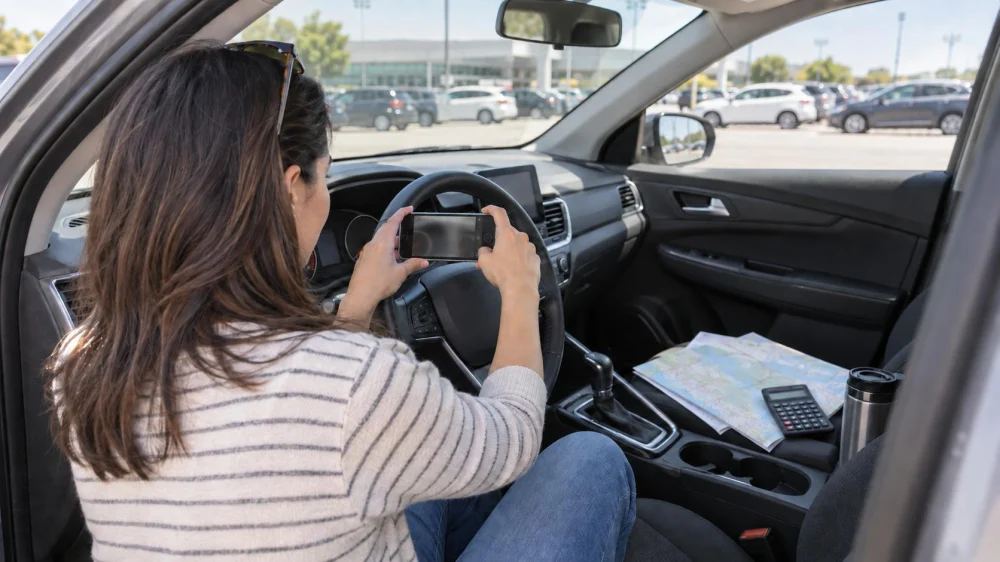
- Photograph the full dashboard with mileage and fuel or charge level while parked.
- Ensure the displayed mileage matches the agreement.
- Report a discrepancy before leaving and obtain a written correction.
- Save the vehicle plate, unit number, pickup time, and contract.
- Do not reset or rely only on the trip odometer as the handoff record.
Manage changes and return evidence
Monitor total mileage during the trip and contact the rental company before changing the route or extending the rental. Ask for written confirmation of the new return time, location, rate, and mileage terms. An extension may not preserve the original allowance.
At return, photograph the odometer, fuel or charge level, vehicle condition, location, and time. Obtain a receipt showing recorded mileage. Keep the documents until all final charges post.
Handle a mileage discrepancy
Compare the pickup and return odometer photos with the invoice and calculate the difference. Check the unit, transposed digits, replacement vehicle, location change, and extension terms. Send a concise dispute with the agreement, photos, receipt, and calculation before the contract deadline.
If the company changed vehicles during the rental, keep handoff mileage for both units so miles are not duplicated. Obtain a case number and preserve correspondence.
Frequently asked questions
Does unlimited mileage mean I can drive anywhere?
No. Geographic, road, border, vehicle, renter, and use restrictions can still apply. Read the permitted-use terms separately from the mileage allowance.
Are miles calculated per day or for the whole rental?
It depends on the agreement. Some multiply a daily allowance by rental days; others use a fixed total and may not roll unused miles between periods.
What happens if I keep the car longer?
An approved extension can change the rate and mileage allowance. Get the complete new terms in writing before the original return deadline.
Sources and evidence notes
This article uses general rental-contract and trip-planning principles: define the allowance, estimate all driving, compare full costs, document odometers, and confirm changes in writing. The booking disclosure, signed rental agreement, written extension, return receipt, and applicable consumer rules govern a specific rental.
Conclusion and next steps
Before booking, map the full trip and price both capped and unlimited options with realistic overage. At pickup, verify the odometer and contract before leaving. During the rental, obtain written changes. At return, capture the final mileage and keep the receipt until the statement matches your calculation.






 Oscar Car Rental Sun Prairie4.0 (10 reviews)
 Rent a Car4.0 (13 reviews)
 Enterprise Rent-A-Car4.0 (358 reviews)
 Budget Car Rental3.0 (159 reviews)
 National Car Rental4.0 (153 reviews)
 Enterprise Rent-A-Car4.0 (616 reviews)
 Rental Car Mileage Limits: Estimate Trip and Overage
 Rental Car Tolls: Transponder, Billing, and Receipts
 Airport Rental Car Pickup: Plan the Route and Timing
 Rental Car Size Classes: What the Category Really Means
 Rental Car Border Crossing: Permission, Documents, and Coverage
 Rental Car Child Seat: Reserve, Inspect, and Install